About Picnic at Hanging Rock
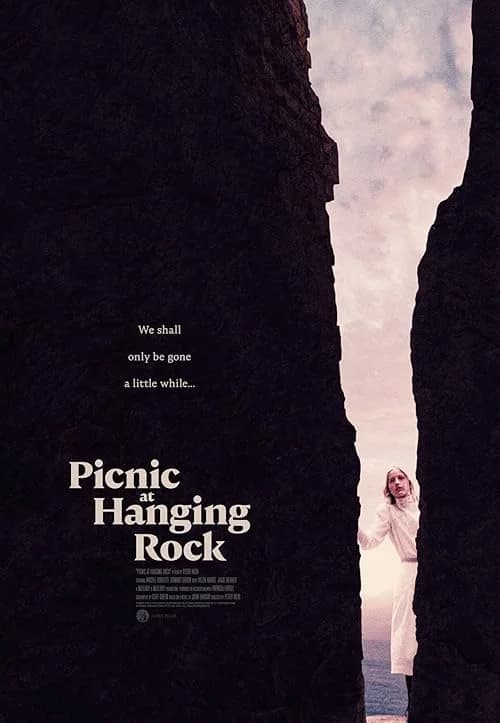
Peter Weir's 1975 masterpiece 'Picnic at Hanging Rock' remains one of Australian cinema's most enigmatic and atmospheric achievements. Set on a stifling Valentine's Day in 1900, the film follows students and teachers from Appleyard College, a strict girls' boarding school, as they embark on a picnic to the ancient volcanic formation of Hanging Rock. What begins as a genteel outing transforms into an enduring mystery when three students and one teacher inexplicably vanish among the monoliths, leaving no trace behind.
The film's power lies not in solving the mystery, but in exploring its aftermath. Weir masterfully builds an atmosphere of dreamlike unease, using Gheorghe Zamfir's haunting pan flute score and Russell Boyd's luminous cinematography to create a palpable sense of otherworldliness. The rock itself becomes a character—an ancient, indifferent presence that seems to exist outside of time.
Performances are uniformly excellent, with Helen Morse, Rachel Roberts, and the ensemble of young actors perfectly capturing the repressed Victorian era colliding with the untamed Australian landscape. The film examines themes of colonialism, sexual repression, and the clash between rigid societal order and primordial nature.
Viewers should watch 'Picnic at Hanging Rock' for its unparalleled atmospheric storytelling. It's a film that lingers in the imagination long after viewing, less a conventional mystery than a poetic meditation on the unknowable. Its influence can be seen in countless subsequent works, and its haunting beauty makes it essential viewing for anyone interested in cinematic art.
The film's power lies not in solving the mystery, but in exploring its aftermath. Weir masterfully builds an atmosphere of dreamlike unease, using Gheorghe Zamfir's haunting pan flute score and Russell Boyd's luminous cinematography to create a palpable sense of otherworldliness. The rock itself becomes a character—an ancient, indifferent presence that seems to exist outside of time.
Performances are uniformly excellent, with Helen Morse, Rachel Roberts, and the ensemble of young actors perfectly capturing the repressed Victorian era colliding with the untamed Australian landscape. The film examines themes of colonialism, sexual repression, and the clash between rigid societal order and primordial nature.
Viewers should watch 'Picnic at Hanging Rock' for its unparalleled atmospheric storytelling. It's a film that lingers in the imagination long after viewing, less a conventional mystery than a poetic meditation on the unknowable. Its influence can be seen in countless subsequent works, and its haunting beauty makes it essential viewing for anyone interested in cinematic art.